

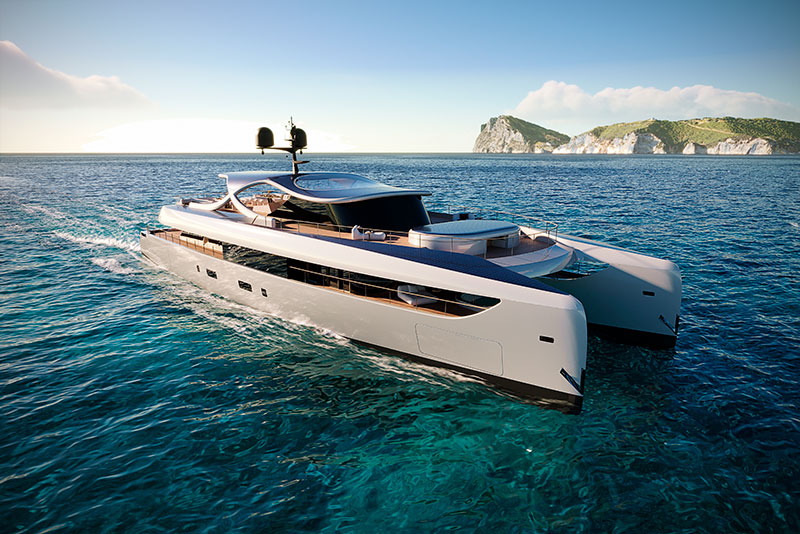
At this year’s boat shows, much of the buzz has centered on sustainable propulsion, futuristic design and the inevitable rise of artificial intelligence in yachting. Few projects capture all three quite like Solsea, the latest launch from Italian shipyard Rossinavi in collaboration with designer Yves Béhar. Billed as the first hybrid-electric catamaran superyacht guided by onboard AI, Solsea is less a floating palace and more a blueprint for how technology, sustainability and human experience can coexist at sea.
Rossinavi’s in-house “Rossinavi AI” system is the most talked-about feature of Solsea. Unlike traditional yacht management systems, this AI doesn’t just monitor — it learns. It studies how owners and guests use the vessel, anticipates their needs and guides both crew and passengers toward sustainable practices. From adjusting energy use in real time to suggesting lower-impact cruising habits, the AI becomes part navigator, part steward, part teacher.
“It’s not simply software,” says Federico Rossi, Rossinavi’s chief operating officer. “It’s a companion that adapts to the preferences of everyone onboard while helping the yacht reach its full eco-friendly potential.”
The AI also ensures the health of the battery pack, keeping it within the optimal 20% to 80% charge window to extend lifespan. For guests, the result is seamless: lights, climate and navigation adjust with subtle intelligence, creating an experience that feels tailored without being intrusive.
The 141-foot catamaran is engineered for versatility. On one-day trips, Solsea can run entirely on electricity. On multi-day journeys, it manages 90% electric operation, and even during a transatlantic crossing, the yacht stays 80% emission-free. A five-hour fast-charge system and solar panel integration give it impressive self-sufficiency, while its “hibernation mode” allows it to power down when moored, sometimes even generating enough energy to feed back into a villa onshore.
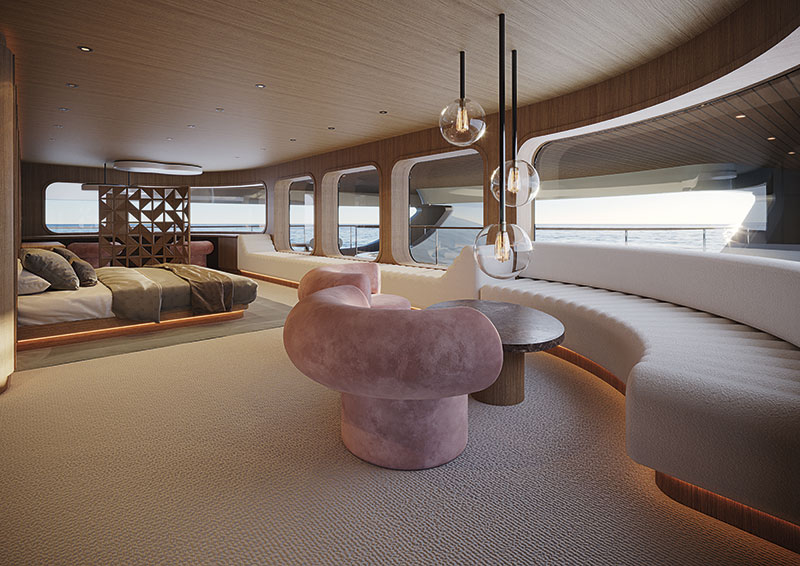
Béhar’s design enhances this green tech with a refined yet approachable aesthetic. Warm matte wood tones, bouclé fabrics and cork flooring meet fluid, sculptural forms that feel organic rather than futuristic. “For me, Solsea is a return to simpler, more respectful ways to enjoy the oceans while integrating the future of efficient propulsion,” Béhar explains.
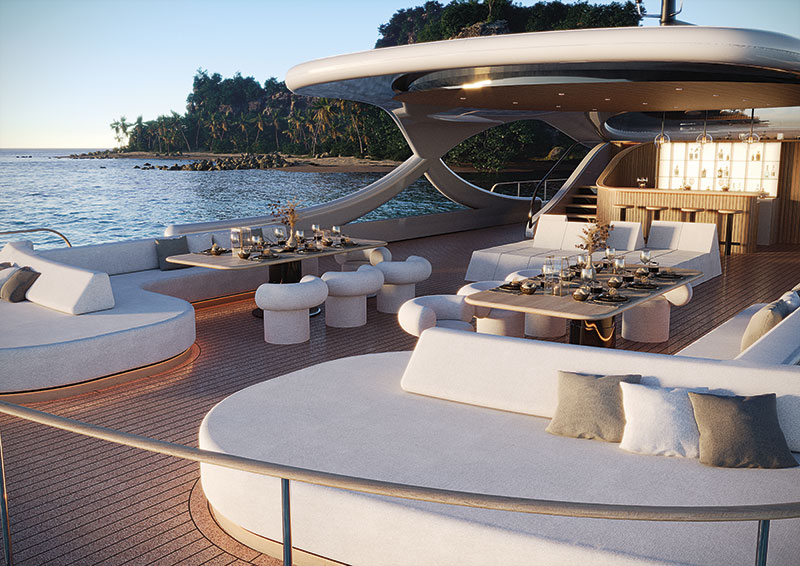
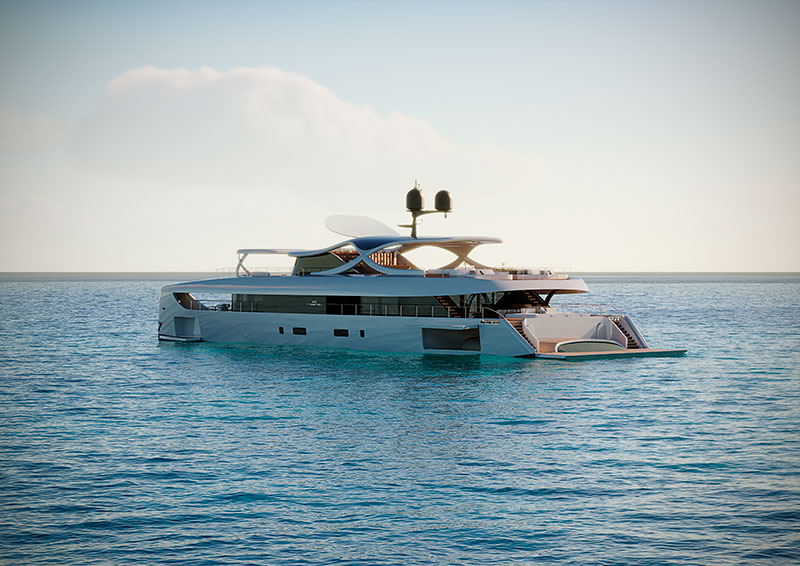
The yacht’s onboard spaces blend luxury and practicality. A full-beam owner’s cabin stretches across both hulls, with a sweeping 180-degree view and private bow balcony. A hydraulic rear platform unfolds into a playground for watersports. The sundeck features an elevated bar and lounge with panoramic views, perfect for gatherings that spill into the night.
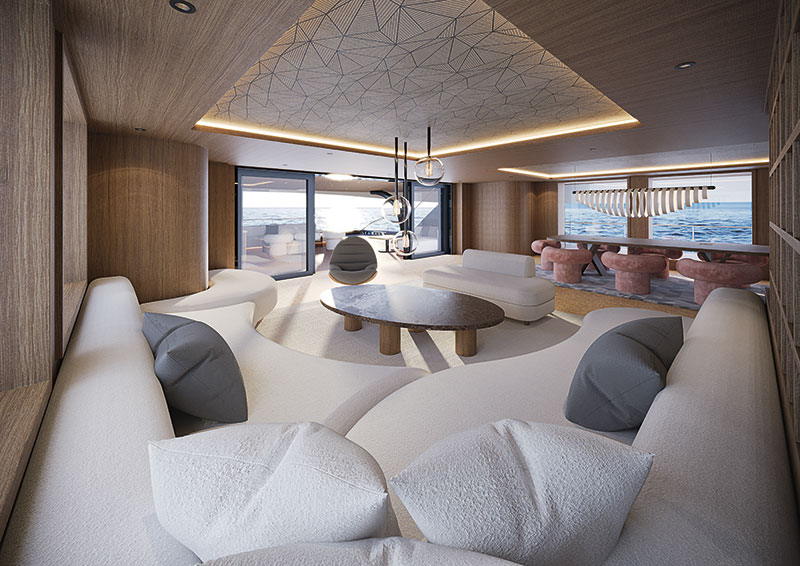
Even here, AI plays a role: adjusting lighting, managing power loads and fine-tuning systems so the guest experience feels effortless. The goal is not to dazzle with visible technology, but to create an environment where guests feel more connected to the sea than to the systems supporting them.
Solsea is part of Rossinavi’s broader “BluE” philosophy, inspired by phytoplankton and their ability to harness sunlight. The line is committed to hybrid-electric vessels that can dramatically reduce carbon emissions without sacri-ficing luxury. By day, solar panels absorb energy. By night, stored power is released, symbolically echoing bioluminescent plankton glowing in the dark seas.
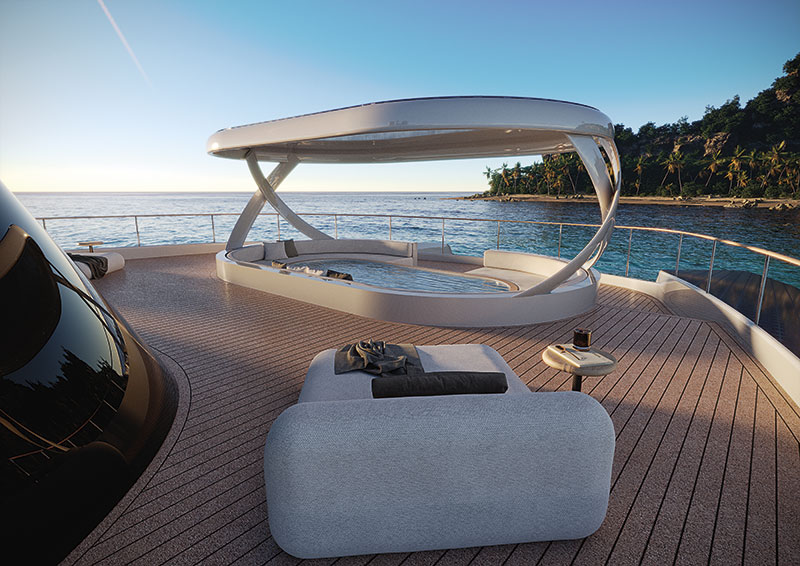
For Rossinavi, this isn’t a design flourish. It’s a company-wide mission to merge Italian craftsmanship with environmental responsibility. Their challenge is to prove that sustainability doesn’t mean compromise, and Solsea may be their strongest case yet.
Artificial intelligence in yachting isn’t about replacing crew or automating the joy out of boating. It’s about using data, sensors and predictive modeling to create safer, cleaner and more personalized experiences. Whether guiding optimal routing, monitoring emissions or tailoring onboard comfort, AI opens possibilities that traditional design alone cannot. “The AI can personalize experiences at both the individual and group level,” shares Béhar. “Each guest can have a tailored experience, while the system also optimizes the overall vessel environment for comfort and efficiency.”
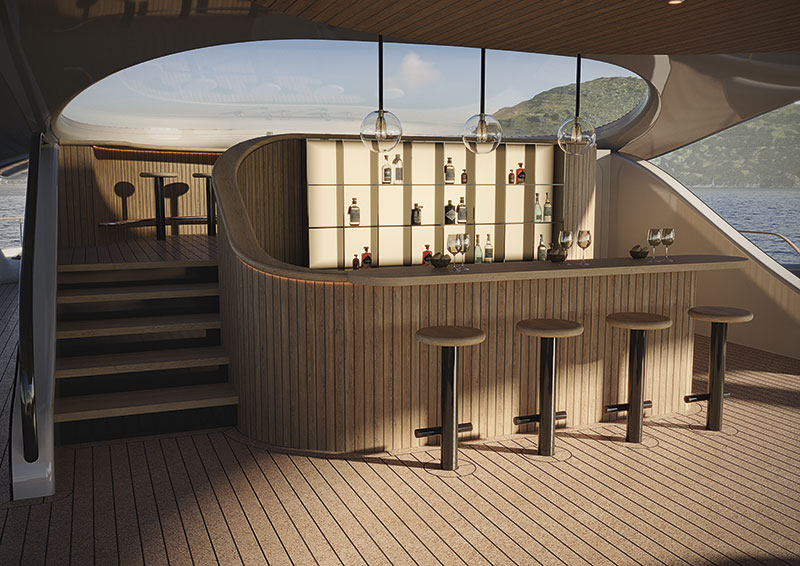
As yachts grow larger and more complex, AI bridges human desire and technical possibility. “Over the next 5–10 years, we see AI advancing toward predictive routing, smarter energy management, and enhanced support for semi-autonomous navigation — always with human supervision at the core,” he continues. “Moreover, as the industry moves increasingly toward sustainable propulsion systems (though it is not yet clear which technologies will prevail), AI will play a key role in helping yachts adapt more quickly and efficiently to these new solutions.” For owners, that means peace of mind. For designers, it means freedom to create in harmony with the planet. And for the industry, it signals a turning point: luxury no longer measured only in square footage and speed, but in intelligence and responsibility.
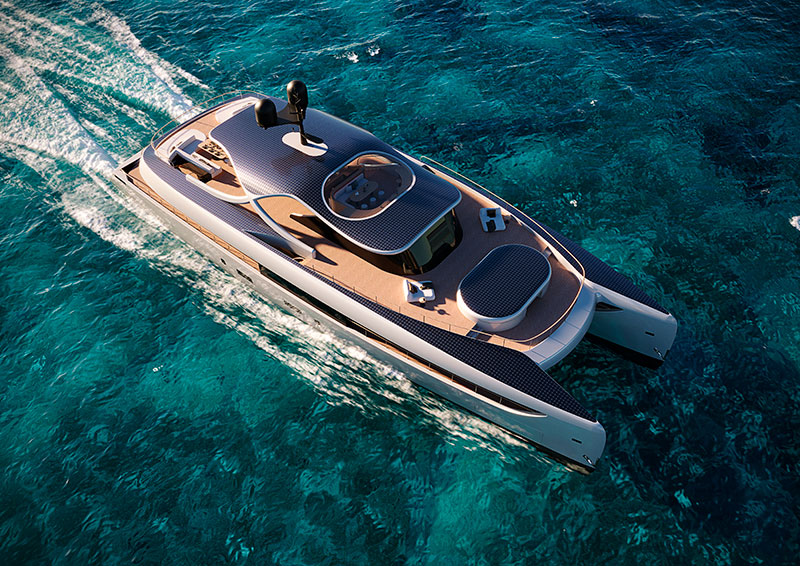
In the end, Solsea isn’t just Rossinavi’s newest launch; it’s a declaration. The future of yachting is sustainable, intelligent and deeply human. And AI, once the stuff of science fiction, is now the compass pointing the way forward.


