

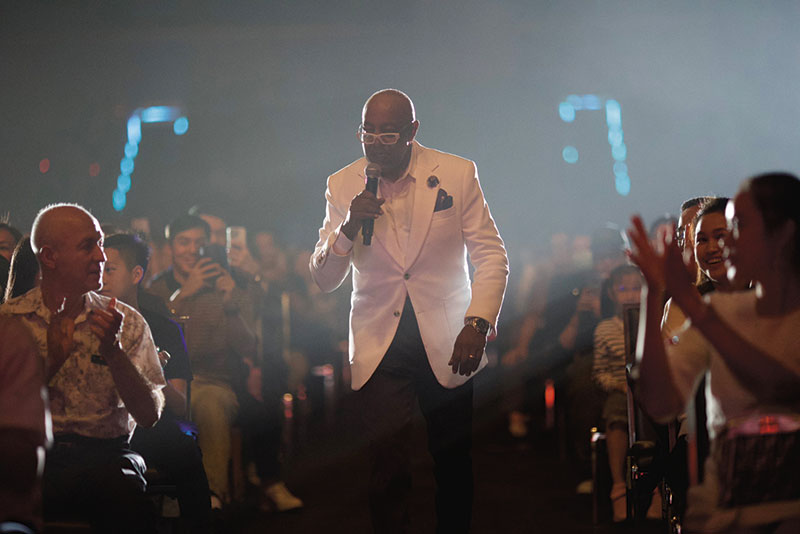
Few singers have left as indelible a mark on popular music as Peabo Bryson. With a career spanning more than five decades, the South Carolina-born vocalist has become synonymous with soaring love ballads and unforgettable duets. Known as the “Pavarotti of soul singers,” Bryson has earned two Grammy Awards, performed Academy Award-winning songs and carved out a unique place in music history by topping four different charts: pop, R&B, classical crossover and contemporary jazz.
So why love? Why has nearly every track in his catalog leaned toward romance? “God is love… that taught me what real sacrifice is,” Bryson says. “You’ve got to love somebody an awful lot to suffer like that, and that became the foundation of how I understood life and faith.”
Bryson’s career has been defined by iconic collaborations. His 1992 duet with Céline Dion, “Beauty and the Beast,” and 1993’s “A Whole New World” with Regina Belle remain cultural touchstones, each winning Grammy Awards for Best Pop Performance by a Duo or Group with Vocals. Both songs also featured in Oscar-winning Disney films, cementing Bryson’s place as the voice of a generation raised on animated classics.
But his duet repertoire goes far deeper. Throughout his career, Bryson has recorded nearly 50 duets with legends such as Roberta Flack, Natalie Cole, Patti Austin, Chaka Khan and Kenny G. “I learned how to do great duets from Roberta Flack,” he explains. “It put me on radars I wasn’t on before. A good duet lets the voices breathe together, it’s like conversation in song.”
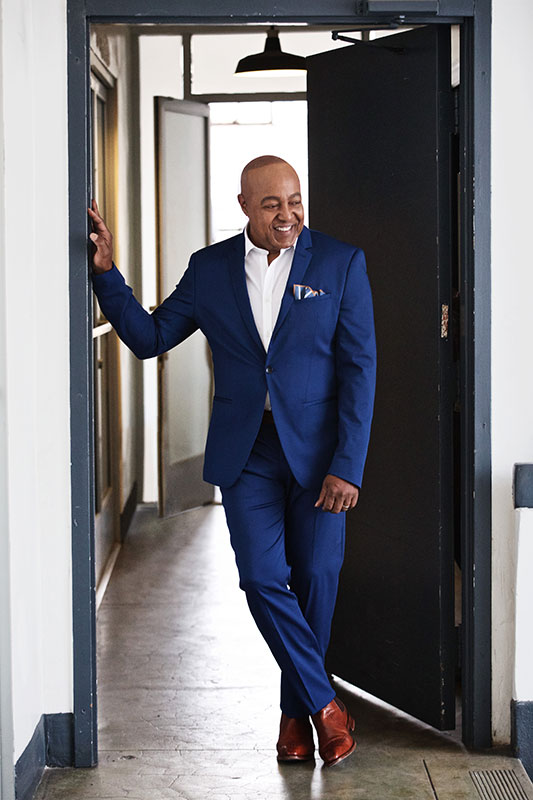
His voice has carried him into unexpected spaces, too. He recalls recording The King and I with Julie Andrews and suddenly discovering he had unscripted dialogue to perform opposite the great dame herself. “Are you waiting for me to say something?” he remembers asking, to which Andrews simply replied, “You’re darling.” It became a career-defining moment and the start of a lifelong friendship.
Recognition hasn’t always kept pace with achievement, Bryson admits with a wry smile. “I get more accolades now than I did before. It’s like the world is catching up,” he says. Yet his legacy is undeniable: more than 25 Top 40 singles, multiple gold albums in the ’80s and a reputation as one of the most technically gifted vocalists in contemporary music.
For Bryson, the highlight reel also includes off-stage moments: sharing the bill at a tribute concert for Nelson Mandela shortly after his release from prison, or receiving a spontaneous poem from Maya Angelou while riding an airport escalator. “Sometimes the loudest thank you is silent,” he reflects.
At 74, Bryson isn’t slowing down. He’s working on a book of essays and still dreams of future collaborations and Mariah Carey tops his wish list, as does Sade. “I even made a whole project called Looking for Sade,” he jokes.
If the past five decades prove anything, it’s that Bryson’s voice (smooth, powerful and rooted in love) remains timeless. “What you don’t give a song, it won’t have,” he says. “And what you do give it, that’s all it will ever be.”


