

There’s a moment, somewhere along northern Arizona’s open highway, when the road straightens, the air sharpens and the horizon feels infinite. The desert glows in colors that don’t exist on a painter’s palette (terracotta, gold, mauve) and for a second, it’s as if the landscape is holding its breath. This is a place where time feels geological, where wind and water have spent millions of years chiseling beauty into silence.
The Grand Canyon
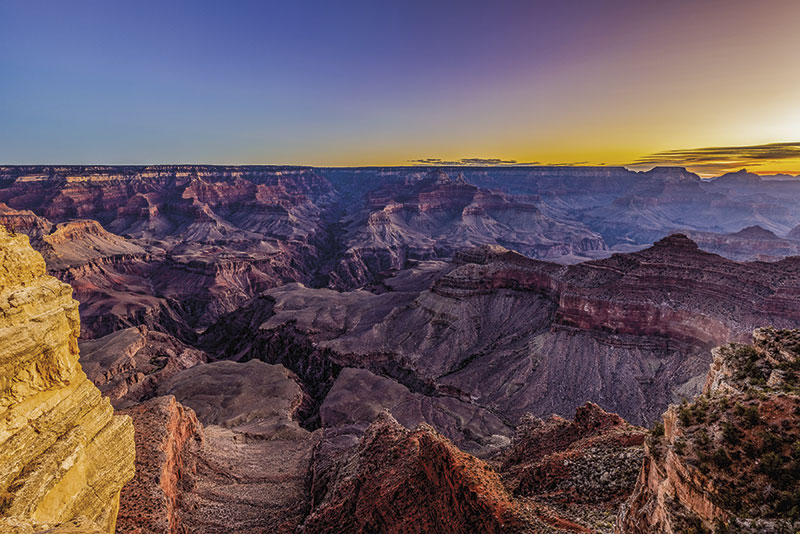
The first glimpse is always startling. You expect vastness, but not like this. The Grand Canyon isn’t just wide, it’s deep in a way that twists your sense of scale. One moment you’re walking across an ordinary plateau, the next you’re staring into a cathedral carved by eternity.
Stand at Mather Point at dawn, and the world glows in watercolor. Layers of rock blush pink and amber as the sun brushes against the horizon, revealing two billion years of Earth’s memory. By afternoon, shadows sculpt the cliffs and hawks drift in the updraft like dancers suspended in a dream.
For those craving a closer look, hiking the Bright Angel Trail delivers an intimacy the rim can’t match: the temperature rises, the sounds fade and you begin to understand that this canyon is not just a landmark, but a living organism. Evenings belong to the South Rim, where you can settle in at El Tovar’s stone terrace, sip an Old Fashioned and watch the canyon walls ignite under a fiery sunset. No photograph can truly capture the way it moves—the way light seems to breathe against stone.
Antelope Canyon
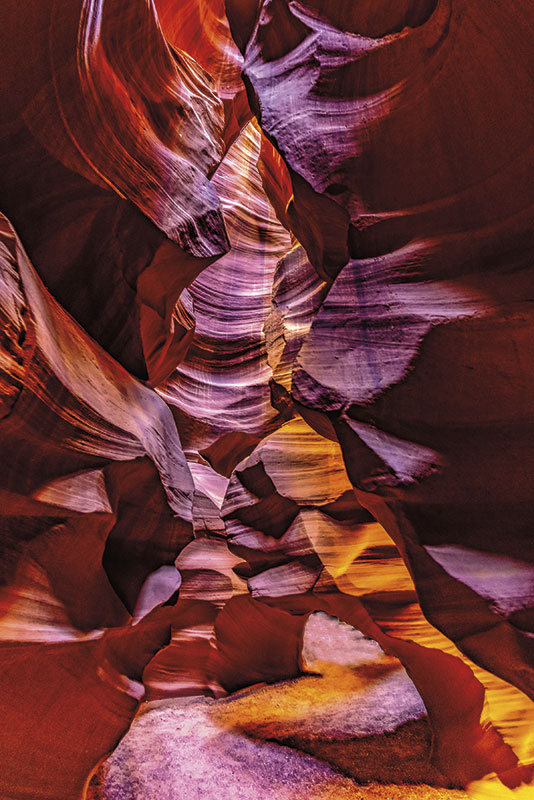
Where the Grand Canyon is symphonic, Antelope Canyon hums like a whispered hymn. Just outside Page, a desert wash narrows into a slit in the earth and you descend into something otherworldly. The air cools, the light dims and suddenly the world becomes sculpture.
Antelope’s walls twist and swirl, a ballet of sandstone molded by flash floods and centuries of patience. Rays of light pour through the openings above, igniting the walls in soft reds and liquid golds. Each chamber feels different—some as narrow as a hallway, others as grand as cathedrals.
Upper Antelope is famous for its “light beams”: columns of sunlight that appear only at certain times of year, cutting through the darkness with breathtaking precision. Lower Antelope, meanwhile, feels more intimate and mysterious, its passageways curling inward like a secret. In both, you find yourself whispering without meaning to. It’s not a place you visit so much as a place that humbles you.
Horseshoe Bend
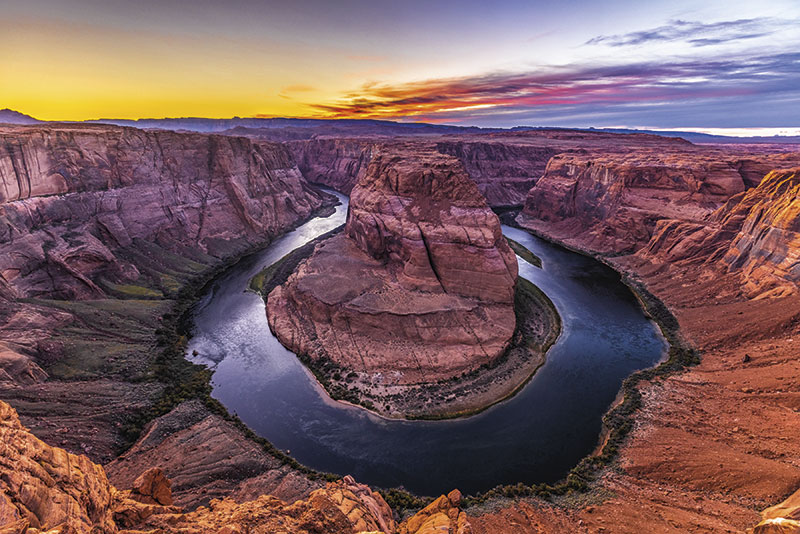
A short drive west takes you to Horseshoe Bend, perhaps the most cinematic bend of water in the world. A brief hike from the highway ends at the edge of a thousand-foot drop, where the Colorado River makes an impossible turn around a sandstone butte. It’s the kind of view that makes you question how anything this symmetrical could exist by accident.
As the sun lowers, the cliffs blush orange and rose, and the river below glows turquoise, winding like a painted ribbon through the desert. Sit long enough and you’ll notice the silence here too…no traffic, no chatter, just wind brushing past your ears and the faint echo of water carving through history.
Horseshoe Bend is the perfect punctuation mark to Arizona’s story. The same river that gouged the Grand Canyon and flows through Antelope Canyon continues ere, still working, still writing its story, just more slowly now.
The Road Between
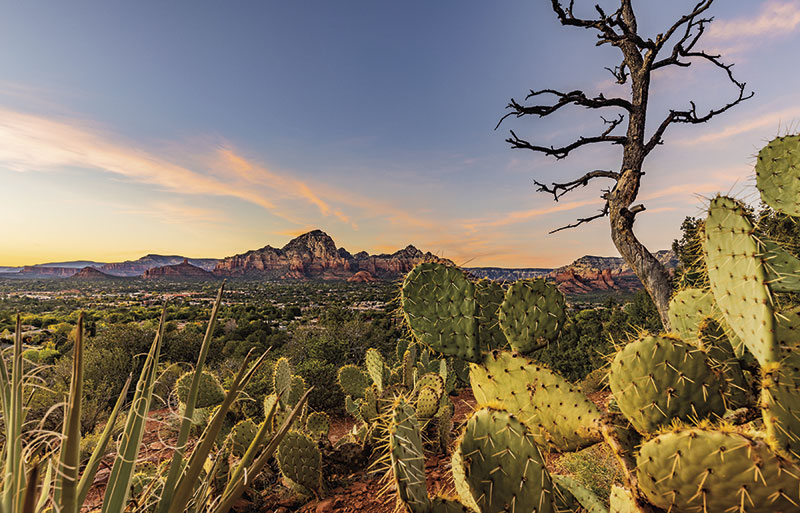
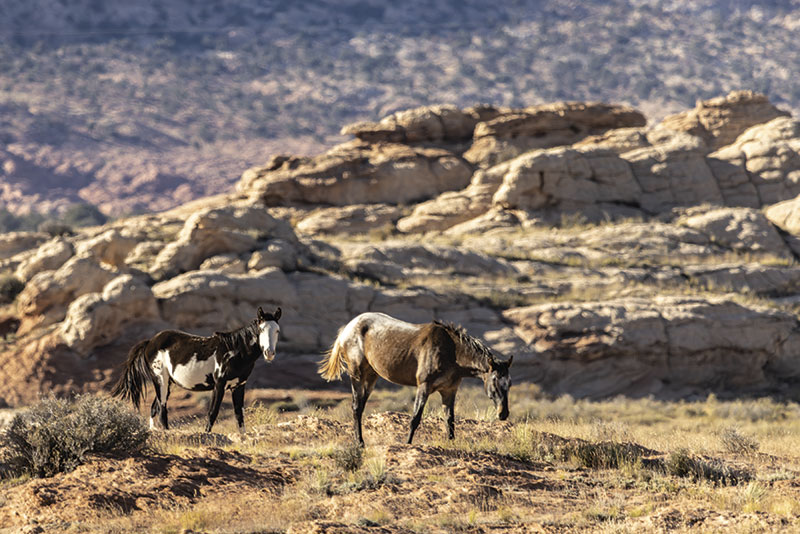
The beauty of this stretch of Arizona isn’t confined to its landmarks; it’s in the spaces between them. The drive from the canyon to Page winds through the Painted Desert, where mesas rise like giant sentinels and the horizon shifts with every mile. Roadside stands sell turquoise jewelry, fry bread and stories from the Navajo Nation. Stop for gas, and you might end up in a conversation about the last monsoon or where to catch the best view of the Milky Way.
Nights here are extraordinary. Without city lights, the sky becomes an unbroken dome of stars. Constellations you’ve forgotten appear again (Orion, Cassiopeia, the slow sweep of the Milky Way). It’s hard not to feel something ancient stirring in that stillness.
Epilogue of Stone
Arizona doesn’t ask for your attention…it takes it. Every curve of canyon, every gust of desert wind, every beam of light is a reminder of what the world can do when left to its own rhythm. These places (Grand Canyon, Antelope Canyon, Horseshoe Bend) aren’t just attractions. They’re proof that beauty can be both vast and quiet, fierce and patient.
When you leave, the desert doesn’t quite leave you. That’s the thing about Arizona: it makes you want to return, not to see more, but to feel it all over again.


