

I’m sure many of our readers has seen at least one of the two thrillers called Cape Fear. It’s the tale of an attorney and his family living on a houseboat in North Carolina, terrorized by a crazed assassin sent to prison by the attorney. The 1962 film starred Gregory Peck and Robert Mitchum; the 1991 remake by Martin Scorsese starred Robert De Niro and Nick Nolte.
Both films, big hits, were based on The Executioners, a novel set in Florida. There was no houseboat in the book, but a small yacht. The houseboat would come along in one of the author’s later novels, in fact a whole series of them, 21 in total, making it arguably the most famous houseboat in modern fiction.
And where was this houseboat moored? Why, Bahia Mar of course, Slip F-18, all 52 feet of it. Called the Busted Flush, its resident was Travis McGee, a self-described “salvager” who invariably runs into intrigue and tangled webs of fraud and crime with an abundant assortment of vividly etched characters.
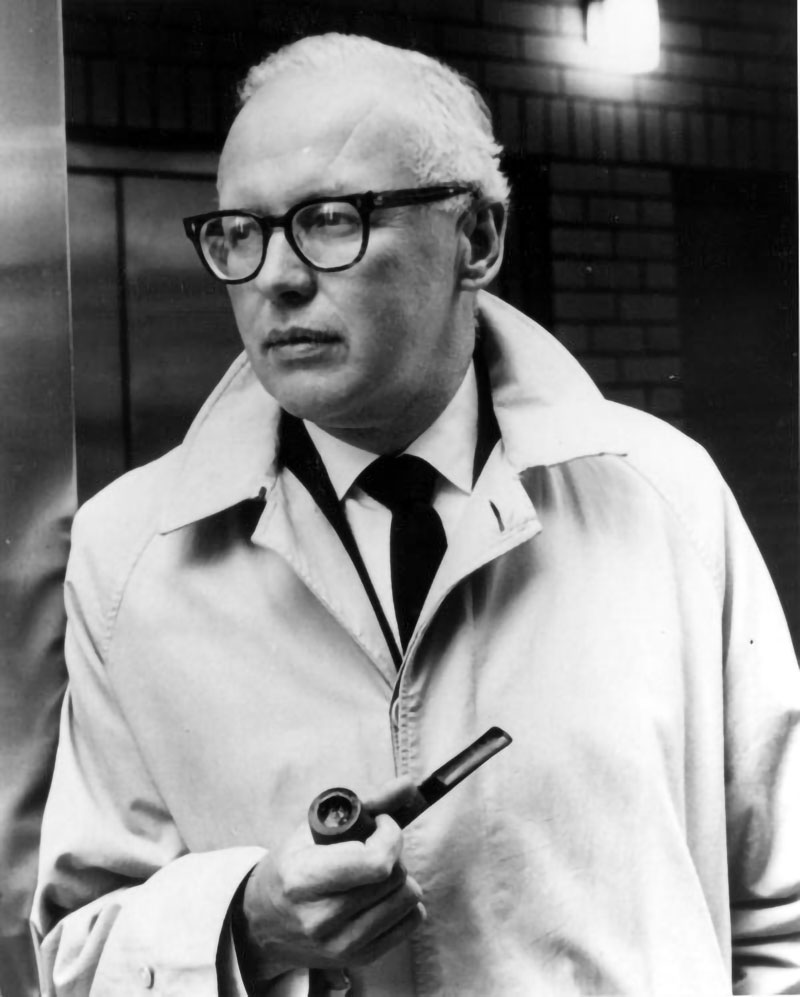
The author, John D. MacDonald, put Bahia Mar and “Lauderdale,” as McGee called it, on the world map. The hefty Travis McGee portion of the author’s 70 million in book sales will do that.
I’m sure that readers in small Kansas towns or cities like Liverpool would love nothing more than escaping via the life of the adventurous McGee on a houseboat in “Lauderdale,” exploring the Keys and other tropical environs, invariably with a bevy of beauties.
The salvager fought for the little guys, who were usually swindled by unscrupulous fraudsters. McGee took 50% of the recovered assets, which enabled him to enjoy a life free from the cares of the corporate world. That is, until the money ran out and he needed another salvage job.
But don’t think you’re in for a simple read. This is writing with a lot of style. Take this description of a visitor to the Busted Flush in MacDonald’s first McGee novel, The Deep Blue Good-By:
“She was a sandy blonde with one of those English schoolboy haircuts…where big eyes look out at you from under a ragged thatch of bangs.”
Reading MacDonald can also be a learning experience, not only about maritime life. I remember being astounded by one of his novels, as page after page described the biological process that occurs when food encounters the stomach’s acids. Related to an investigation, it was as forensically vivid as anything I saw on CSI 40 years later.
No less a literary figure than Kingsley Amis said MacDonald “is by any standards a better writer than Saul Bellow, only MacDonald writes thrillers and Bellow is a human-heart chap, so guess who wears the top-grade laurels.”
Stephen King called him “the great entertainer of our age, a mesmerizing storyteller.”
MacDonald’s roots were in the Northeast, but sometime after earning an MBA from Harvard and serving in the Army in World War II, he turned to writing. One account has him writing 800,000 unpublished words before landing a detective story in a pulp magazine for 45 bucks. More short stories scored, then came novels including The Executioners (Cape Fear) and in 1964, his first Travis McGee thriller. Lessons learned from his MBA and military service figure in some of the complex embezzlement schemes McGee unwound. MacDonald had settled in Florida by then, eventually moving to Captiva Island.
The appearance of the Bahia Mar in The Deep Blue Good-By came not all that long after the marina was developed.
Once a house of refuge for shipwrecked sailors, it was later made a base to pursue rumrunners. The city took over the property from the Coast Guard in 1940. The Bahia Mar Marina was officially opened with 400 slips in 1949, but in the ensuing years the city struggled to maintain it, fires damaged it and in the 1950s, it was leased to private developers who later defaulted. In the early 1960s, the city reclaimed it and reopened it.
In 1987, two years after the 21st Travis McGee thriller (The Lonely Silver Rain) was published, and a year after MacDonald died, the Friends of Libraries U.S.A. installed a “literary landmark plaque” near what would have been Slip F-18 in Bahia Mar. When the docks were remodeled later, the plaque was moved to the dockmaster’s office.
But I still see McGee checking the channel markers and tide levels in the Keys, looking for a new mooring for the Busted Flush, with its “pair of Hercules diesels, 58 HP each, chugging her along at a stately six knots.”
“Didn’t want to move her,” he said, for an assignment in Marathon. “I like Lauderdale.”


